How much does a corporate video cost – and what are you actually paying for?
The first question I hear from most companies usually sounds like this: “How much would it cost to film our company?” It is a perfectly normal question. But if I answered with a single number, I would not be honest. Today the word “video” covers both a clip shot on a phone and a project with a script, three locations and a full crew. Both are called the same thing, but they cost and work in completely different ways.
So in this article I will try to answer openly: how much a corporate video costs, what you are actually paying for, and how to compare two quotes when one is three times cheaper than the other.
The short answer
Our corporate video projects start from €2,000. Most of our clients’ projects, however, are in the €6,000–8,000 range. That budget usually covers the whole journey – from the idea and script to filming with a crew and versions of the video for different channels. These projects are chosen by companies for whom the priority is not saving money but peace of mind: knowing that everything will be thought through, agreed and delivered exactly as promised.
All prices in this article exclude VAT.
Why is €2,000 the lower limit? Because for less we would have to drop the very things that make a video look and sound professional: the crew, set lighting or separately recorded sound. It would not be the same product, just cheaper. It would be a different product.
Why do video prices vary so much?
When a company collects several quotes, the difference between them can sometimes be tenfold. Usually this does not mean someone is cheating. It means each of them offered a different job.
One videographer arrives with a camera, films what you show them and edits it. Another first asks what you sell, who your client is and what the viewer should do after watching. Then they write a script, plan the filming day and arrive with a crew.
In the first case you pay for filming hours. In the second, for the result the video has to achieve. Both options have a right to exist, but comparing them on the final figure alone is like comparing the price of a bicycle and a car.
What you are actually paying for
The client sees the finished video, which lasts a minute or two. But the price of that minute is made up of work the client never sees.
- Conversation and concept. We work out what the video needs to change in the viewer’s mind. This is the most important part, because everything else depends on it.
- Script. One main idea around which the story, locations, people and editing direction are built.
- Preparation. Location, timing, clothing, sources of noise, lighting. On larger projects we visit the location in advance.
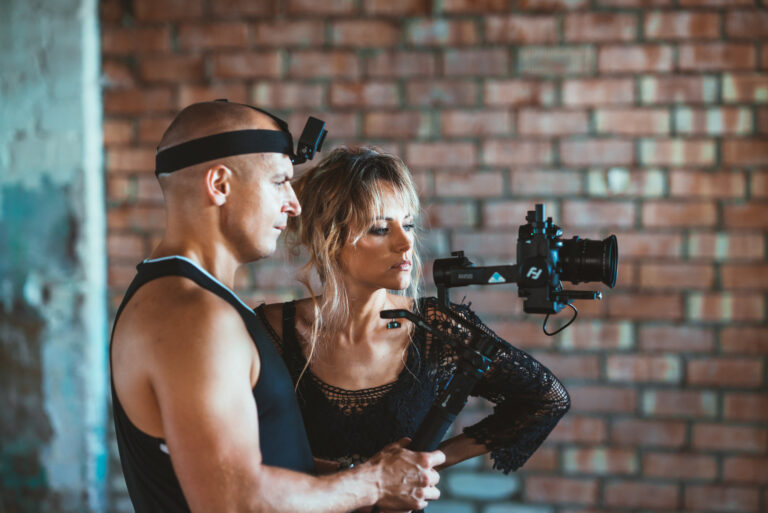
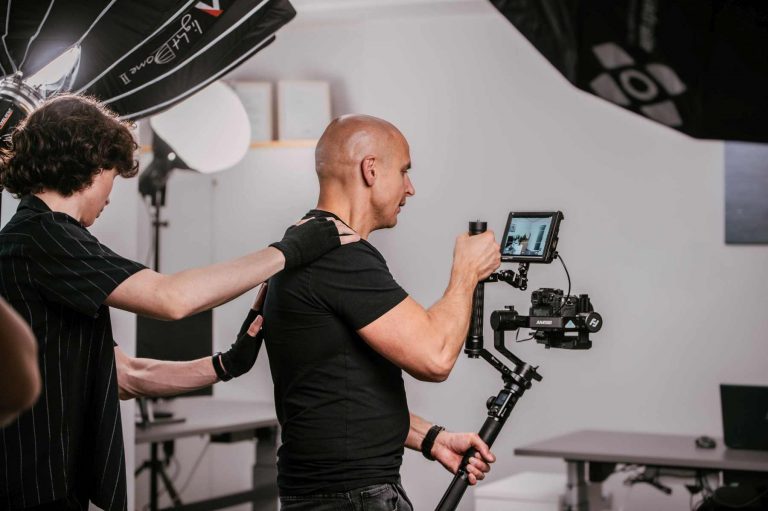
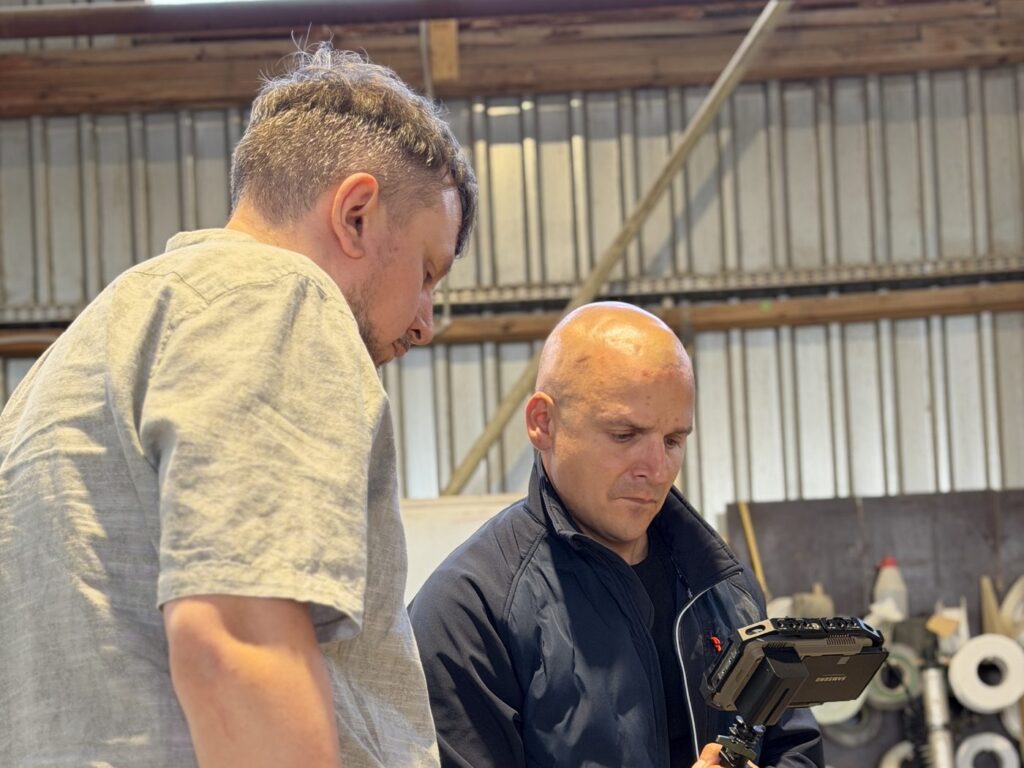
- A filming day with a crew. One person cannot monitor sound, set lights, choose the shot and work with the person in front of the camera at the same time. That is why we film as a team – I wrote more about this in the article why professional filming needs a team.
- Light and sound. Set lighting and separately recorded sound with a backup microphone. Viewers will forgive an average picture, but not bad sound.
- Working with the person on camera. Most of the people we film are not actors. Our job is to help them relax and speak naturally.
- Editing and post-production. Colour grading, sound processing, subtitles, music licences and versions of the video for different channels.
Each of these points can be done superficially or thoroughly. That is where most of the price difference hides.
What makes a project more or less expensive
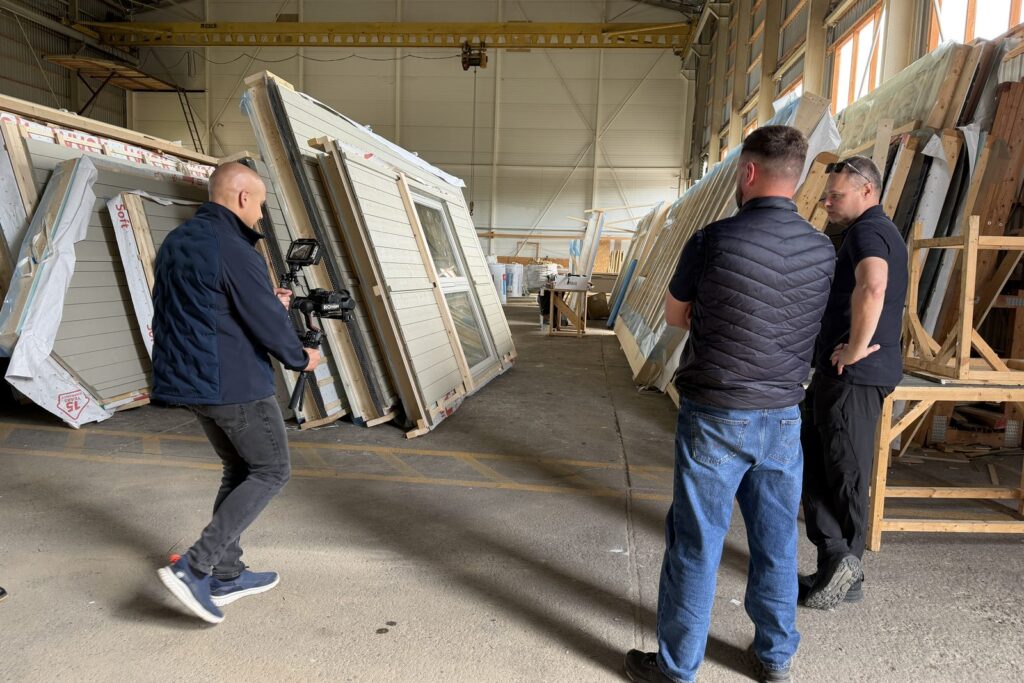
The price depends far more on the scope of the project than on filming hours. Costs go up with:
- several filming locations or several filming days;
- many speakers or actors;
- make-up, drone footage, animation;
- many different video versions and formats.
What brings the cost down is usually in your own hands: a clear goal, one well-prepared location and people who know what they are going to say. Before the shoot it is worth reading how to prepare for filming – it saves time on the day.
Another way to get more for the same budget is to create not one but several videos from one filming day: the main corporate video, a few short vertical clips for social media and a short version for your website. It only takes one thing – planning it in advance rather than after the shoot.
Why a cheap video often costs more
When I started filming, I mostly talked about cameras and equipment. Over time I understood that what matters most to the client is whether the video helps them reach their goal. A cheap video that does not do this is not cheap. It simply costs less until it has to be redone.
I most often see three consequences. First, the video says nothing, so it has to be “pushed” with paid advertising – I wrote about this in the article how to create a video that does not need paid promotion. Second, the video does not match the company’s level, and a business offering a premium service looks cheaper in its own video than it really is. Third, a year later the video has to be filmed again, and you pay twice.
How to compare two quotes
If you have several quotes, do not compare only the final figure. Ask each supplier:
- Who creates the key message and writes the script?
- How many people will work on the filming day, and who is responsible for sound?
- Who will work with your people in front of the camera?
- How many rounds of revisions are included in the price?
- Which video versions and formats will you receive?
- Who will own the rights to the footage?
The answers to these questions will tell you more than the price. You can read more about choosing a partner in the article How to choose a video production partner.
Frequently asked questions
Is it possible to film for less than €2,000?
It is, but then the product itself changes. We usually suggest using a smaller budget for short social media videos rather than for a corporate video that has to serve you for several years.
Why do most projects cost €6,000–8,000?
Because in that case the client hands us the whole process, not just the filming. We clarify the goal, write the script, plan the filming day, work as a crew and prepare the video for all channels. You do not need to coordinate several suppliers or solve technical questions – you only need to make decisions.
Do you charge by filming hours?
No. The price depends on the scope of the project: whether a script is needed, how many locations and days, how many people are filmed and how many versions you need. The exact price is given in a proposal after the first conversation.
Can the price change during the project?
The price is agreed in the proposal based on a clearly described scope of work. It only changes if the scope itself changes – for example, an extra filming location or one more video version is added. We always discuss such changes in advance, so there are no unexpected invoices.
How can we be sure the video will match our company’s level?
Before filming you see and approve the key message and the script. On the filming day we do not improvise – we film what has been agreed. That way the result does not depend on chance.
What if we do not like the final version?
We show you the first version of the video for review, and the number of revision rounds is agreed in advance. Since the message and script are approved before filming, revisions are usually minor – pace, a shot or the text.
What if our CEO does not like speaking on camera?
That is a common situation. Most of the people we film are not actors, so working with the person in front of the camera is part of the filming day, not an extra service.
Who owns the rights to the footage?
Usage rights are discussed before the project and clearly written into the agreement, so there are no questions later about where and how you can use the video.
Do the prices include VAT?
No. All prices in this article exclude VAT.
Instead of a conclusion
The best question to start with is not “how much does a video cost?” but “what does this video need to do for our business?”. Once the answer is clear, the price stops being an expense and becomes an investment you can measure.
If you are considering a corporate video, write or call us – in the first conversation we will work out what you really need, and we will tell you honestly if a video will not solve your problem.