A video team or a single videographer: when you need which
One quote says a camera operator and an edit. Another says a crew, lighting, separately recorded sound and colour grading. The figures differ by a factor of two, and the client is left comparing numbers that describe different products. The honest answer is that both can be right — for different jobs.
Can one person do everything?
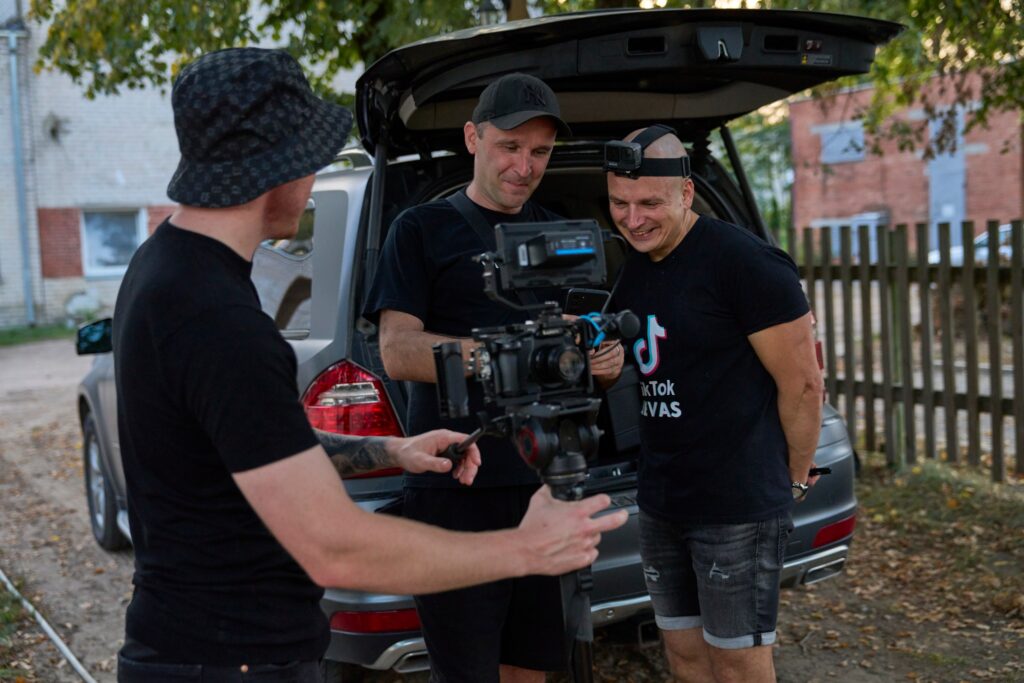
Technically, yes. We used to work that way ourselves, which is exactly why we know what it costs. During a shoot someone has to be listening to the sound on headphones, someone has to be correcting the light, and someone has to be watching what is happening in the background of the frame. One person can do each of those well, but not at the same time.
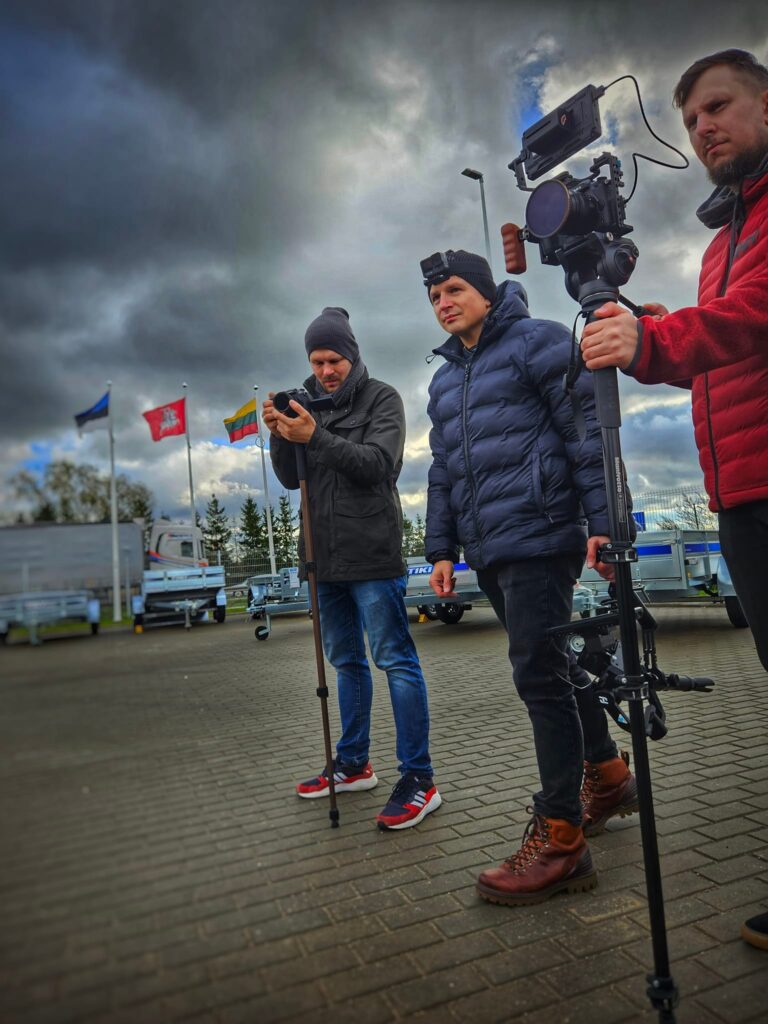
Why a team is necessary
Sound has to be monitored continuously
A microphone can fail silently. If nobody is listening, the problem appears in the edit, when the day cannot be repeated.
Light has to be adjusted as you go
The sun moves, people move, and a frame that was correct ten minutes ago is no longer correct. Somebody has to be free to fix it.
More eyes notice more
A cable in the shot, a crooked badge, a reflection in a window — the operator concentrating on composition genuinely does not see these.
Several angles
Two cameras let the edit remove pauses invisibly and keep the pace. With one camera, the speaker has to get everything right first time.
When one person is enough
It has to be said the other way round too: not every job needs a crew. One experienced person handles a short social media piece, behind-the-scenes material, a single interview in natural light or a site walkthrough perfectly well. In those cases a team would only raise the cost without improving the result.
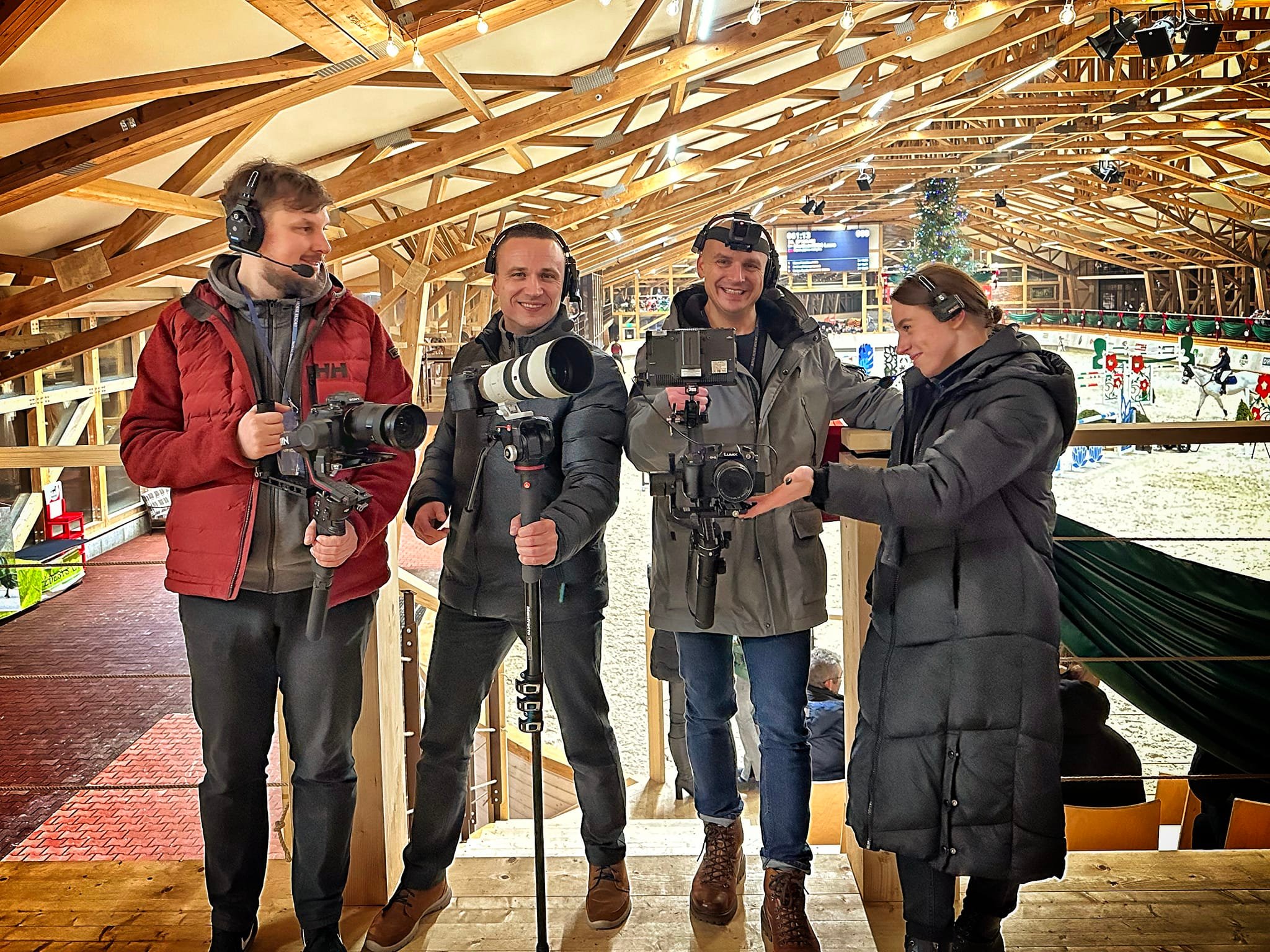
A team is needed when several people are on camera, when the situation cannot be repeated, when light and sound have to be built at the same time, or when one day has to produce material for several different films. In short: when the cost of a mistake is high, you need a second pair of hands and ears.
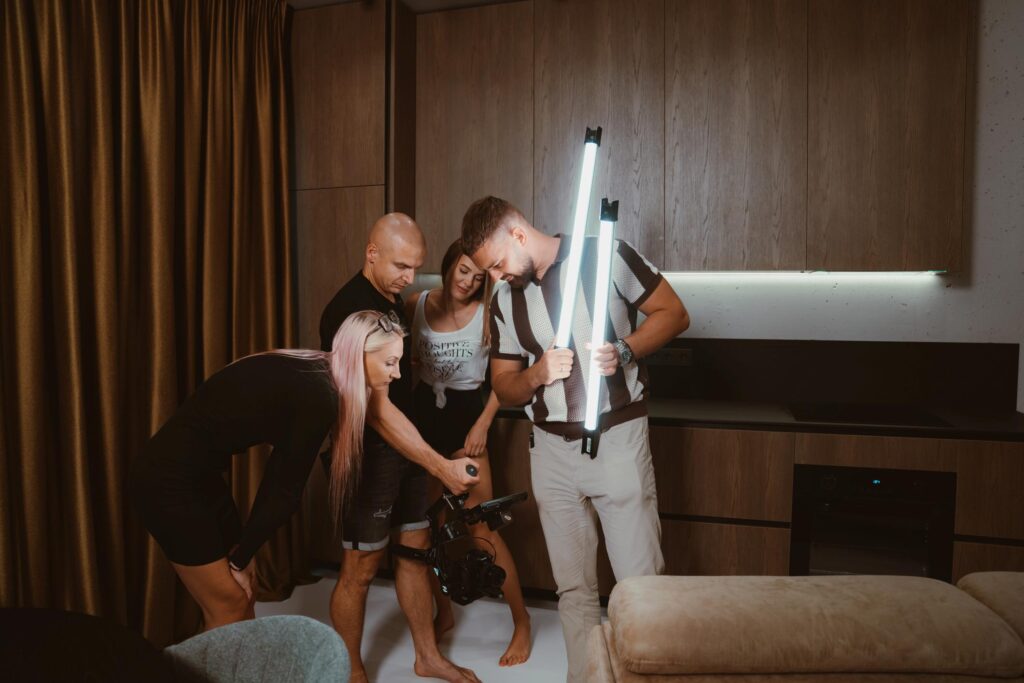
Communication is the deciding factor
The practical question for a client is therefore not “team or one person” but “who exactly will be there on the day, and who is responsible for sound”. The answer tells you immediately whether the quote is realistic.
Frequently asked questions
How many people does a corporate film need?
Usually two: an operator and someone responsible for sound and light. One person cannot watch the frame and monitor sound levels at the same time.
Can I check who will actually turn up to film?
Yes, and it is worth asking when signing. Ask for the names and the role of each person on the day — an honest producer answers immediately.