Why you should not speak your working language on camera
The most common reason a well-made corporate film fails is not the picture. It is that the person on camera speaks the language of their own profession. What sounds normal to colleagues often sounds like a foreign language to the viewer — and a viewer who does not understand does not ask, they leave.
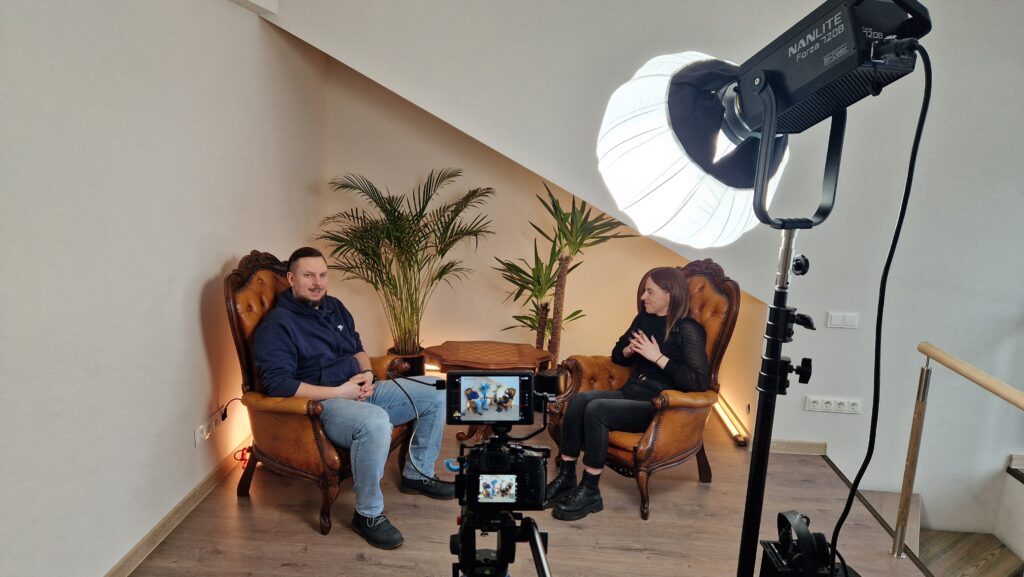
Why professional language does not work on camera
In a meeting a client can interrupt and ask. Watching a video they cannot. Every unexplained term is a small moment of exclusion, and three of them in the first minute are enough for someone to decide the film is not meant for them.
How to make communication understandable
- Name the problem first, in the words the client would use.
- One idea per film. Four terms in one film and none of them will be remembered.
- Use comparisons from everyday life — a comparison is remembered where a definition is not.
- Show what you cannot say. That is what video is for.

How to check your text before filming
A simple test: read the script aloud to someone who does not work in your field. If they ask even once what something means, the text needs rewriting. A second method is to underline every word you would not use over lunch with a friend — that is usually the professional language.
A third check comes from the sound of it: if a sentence needs two breaths to read, it is too long. In spoken language a sentence ends where the breath ends.
What to do when a term is unavoidable
- Say the term and explain it immediately in one plain phrase — the viewer learns rather than gets lost.
- Use a comparison from daily life.
- Show it visually when words will not do.
- One film, one thought.
How this works in both directions
It applies to us as well. When a client says they want “an image film with dynamic composition”, our job is to find out what they want the viewer to feel. Without that translation both sides speak their own language and both believe they have agreed.
Frequently asked questions
Is professional language always harmful in video?
Not when the audience consists of specialists in the same field. The problem starts when the film is aimed at clients but spoken in the way colleagues speak to each other.
How do you explain a complex service in one minute?
Start with the problem the person recognises, not with how your service works. Leave the technical part for the conversation that follows the film.
Who should write the script — the company or the producer?
The best results come from working together: the company supplies the substance and the facts, the producer makes sure it is said in human language and fits the frame.