How to light a commercial, and why it matters
However good the camera is, without the right light it will not record what you want. Lighting determines the colour range, the clarity of detail and the atmosphere — which is why it, not the camera, is where a commercial is won or lost.
What correct lighting is for: authority and attention
In a commercial, light has two jobs. It makes the subject look solid — skin even, shapes defined, no flatness — and it tells the eye where to look. A well-lit frame guides attention without the viewer noticing. A badly lit one leaves the eye wandering across the background.
Three lamps that solve ninety per cent of situations
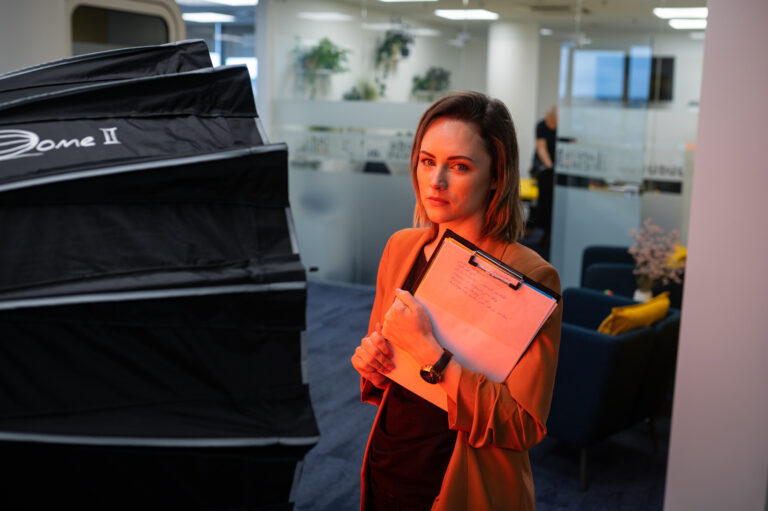
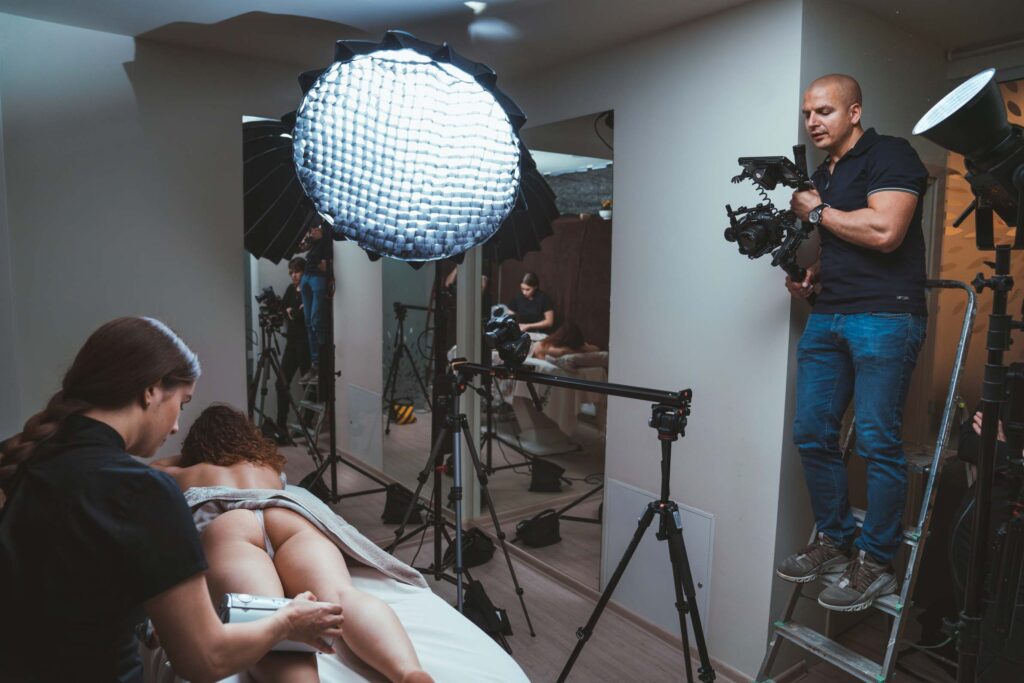
You do not need ten instruments. The key light builds the face and sets the direction of the shadows, the fill lifts the dark side just enough that it does not look like an interrogation, and a third light behind separates the subject from the background. Once those three jobs are done, the frame already looks professional.
The most common mistake is placing the light too far away. The larger and closer the source, the softer the shadows and the more natural the skin. The same lamp pulled back two metres makes a face hard and flat.

How we handle reflections
Glass, glossy surfaces and spectacles are the usual troublemakers. The solution is angle rather than power: moving the source slightly off-axis removes a reflection that no amount of dimming would fix. On product work we also use polarising filters and black cards to control what the surface sees.
Back-light — subtle, but decisive
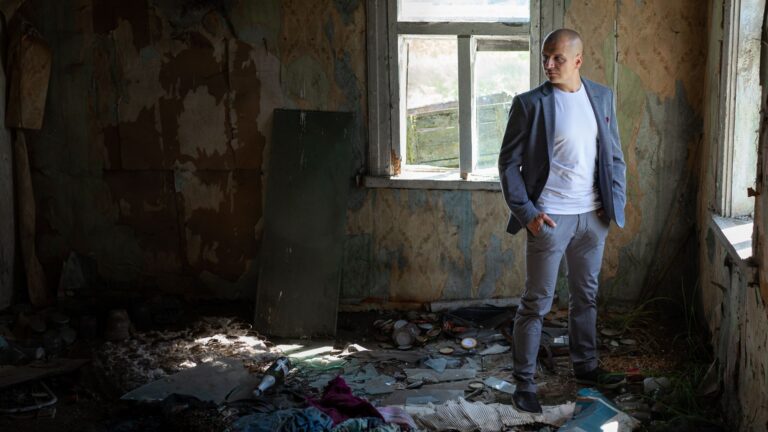
A light behind the subject creates a thin edge of brightness along the shoulder and hair. Viewers never notice it, yet without it the person merges into the background and the image loses depth. It is the cheapest way to make a corporate interview look deliberate.
When filming in an office rather than a studio
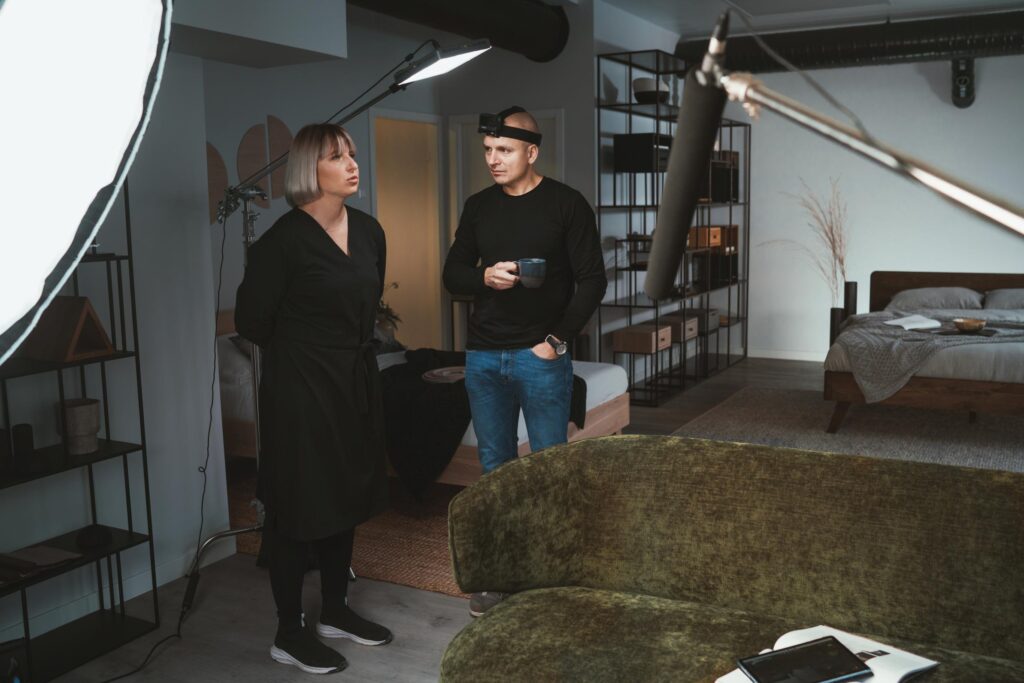
- Switch off fluorescent lamps — they usually cast a green tint that cannot be corrected later.
- Do not place the subject in front of a window unless the window is the main source — otherwise you get a silhouette.
- Work with one colour temperature — warm and cool light in the same frame reads as a mistake.
- Give the background its own light so it does not become a dark patch behind the subject.
Light is the cheapest place to raise the level of a film. A new camera costs thousands; thinking through where the lamps go costs half an hour before the shoot.
Frequently asked questions
Can you film with natural light only?
You can, if you are beside a window during the day and have something to bounce light back into the shadow side — a white reflector is enough. The problem is that natural light changes during a shoot, so it is unreliable for longer filming.
How many lights does an interview need?
Three are almost always enough: key, fill and background. One is enough only when the room already has plenty of daylight.
Why does our video look green or blue?
That is a colour temperature problem — either several different light sources in one frame, or the camera setting white balance incorrectly. Switch off the unnecessary lamps and set white balance manually.