
Commercials
A commercial has one second. In that second the viewer decides whether to keep watching or scroll on. If the film looks like every other one — “we care about our clients”, “we offer quality”, “15 years of experience” — it will be skipped before it has begun. So we build a commercial not as a pretty clip but as a message that has to hold attention.
Four things without which advertising does not work
- Contrast. If the film looks like a corporate slide with moving faces on it, it will be skipped.
- Emotion. Facts do not sell. People react when they laugh, get angry, stop to think or feel stronger.
- Relevance. The film has to talk about the viewer’s reality, not yours. Your ten years of experience are not relevant to them.
- Identity. The viewer has to recognise themselves, or the person they would like to be.
We write about this filter in more detail in the article is your video advertising just more spam.


How we work
- We establish who the commercial is for, where it will run and what action it has to trigger
- We formulate a single message and write a script — not a few lines of plan, but the flow of the story, the visual logic, locations, participants and emotional beats
- We plan the lighting and colour direction according to the mood the commercial has to create
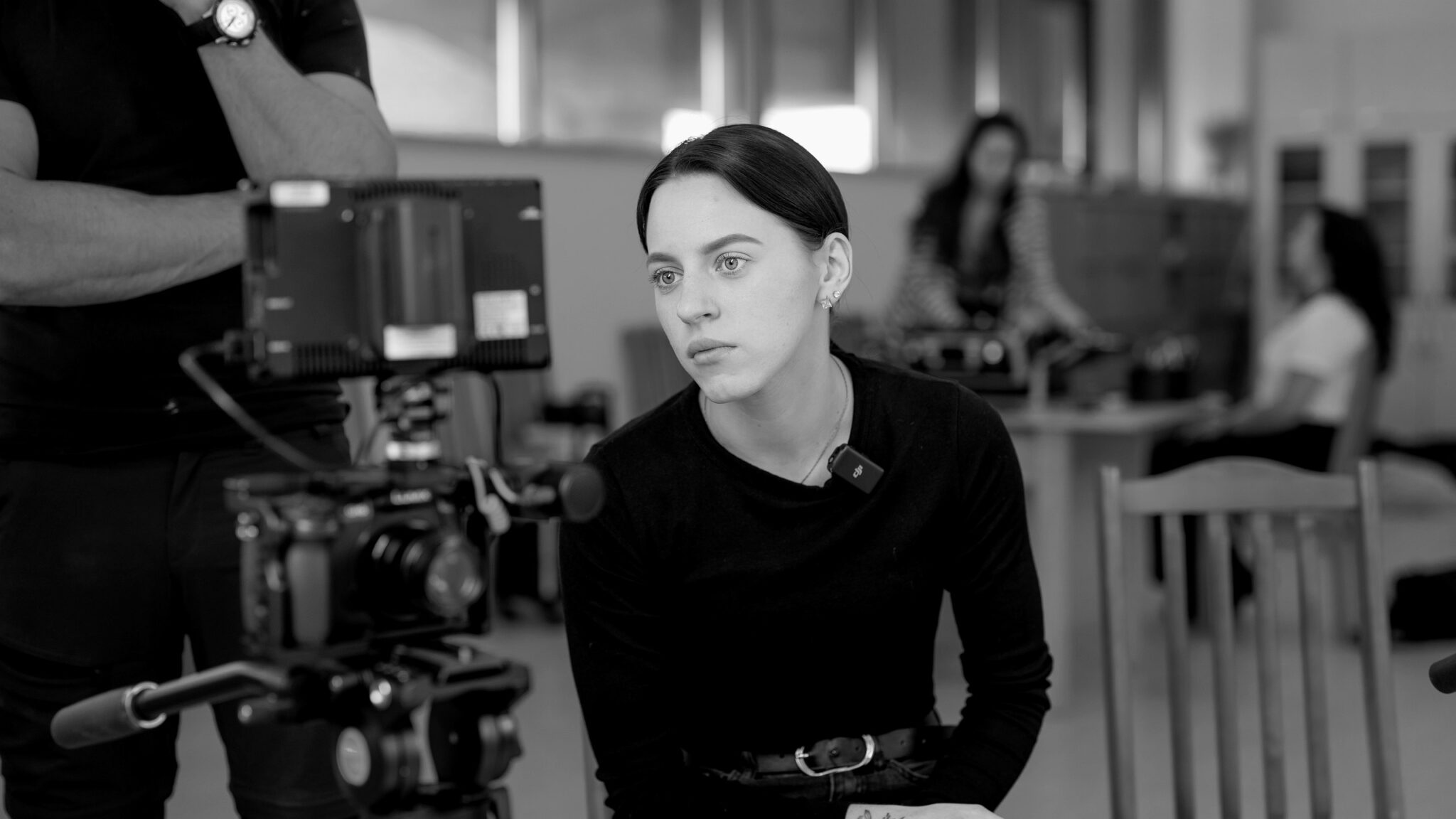
- We film as a team, at 24 frames per second, with set lighting and separately recorded sound
- We edit and prepare versions for different channels and formats


What is included
- Creative concept and script
- Direction and work with the participants
- Production crew, lighting and sound equipment
- Where needed — make-up artist, actors, drone
- Edit, colour grading, sound design, animation, subtitles
- Horizontal and vertical versions
Frequently asked questions
Can you make a viral video?
A single video cannot collect views, entertain an audience and convert into sales all at once — each of those needs a different creative solution. So the first question is never “will it go viral”, but what task the video has to perform.
Why do you film at 24 frames per second?
Because that is how cinema is shot. A lower frame rate creates a natural motion blur, while 60 frames often looks synthetic. Read more: the 24 frames secret.
Do we need a drone?
Only when it says something — for example, when it shows the scale of a site. Drone shots must never overshadow the story.
Examples
Commercials · Commercials with actors · Beauty industry video

Have a project, or just a question? Write or call us — we will discuss it with no obligation.