Why make-up matters on a shoot, including for men
Make-up on a shoot has nothing to do with vanity and nothing to do with gender. It is a working tool, used for the same reason a microphone is used: the camera does not see what the eye sees.
What the camera sees and the eye does not
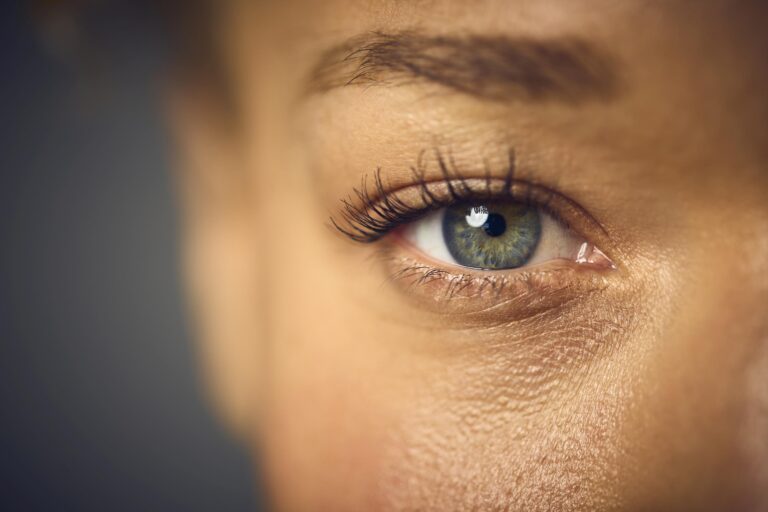
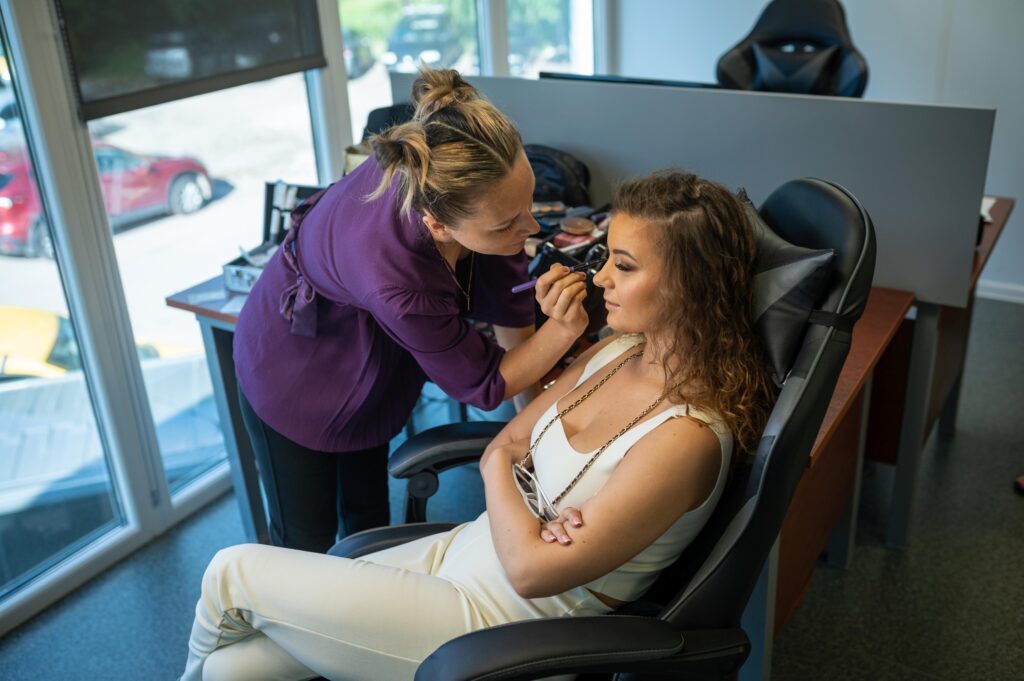
In person someone looks normal. On camera the same face changes for three reasons: built light falls from one side and reveals every unevenness, the lens compresses the planes, and the screen adds contrast. Shine on the forehead, redness on the neck or tired eyes are therefore far more visible in a frame than in life.
The job of make-up here is not to beautify. It is to even out the skin enough that the light does not create distractions. Good work is invisible on camera — the viewer simply sees a person who looks like themselves, only calmer.
Why it matters for men
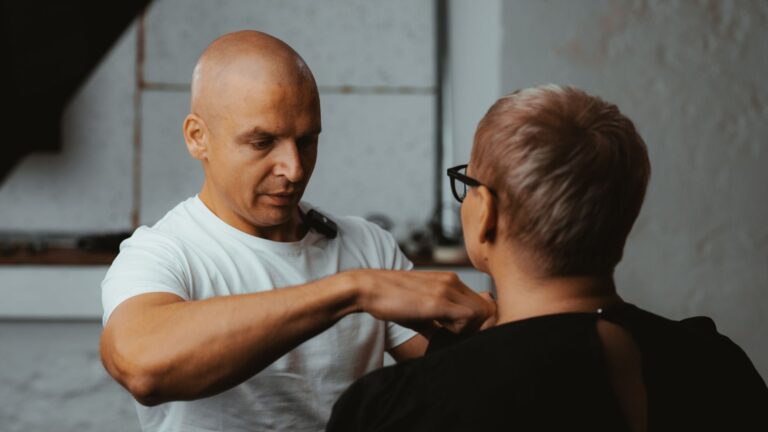
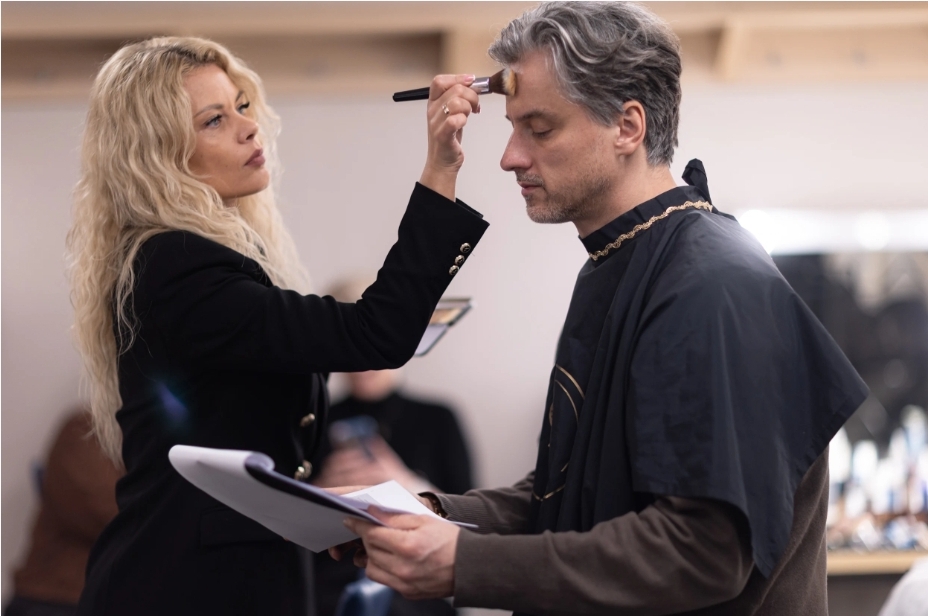
More often than for women, in fact. For men it usually means matte powder on the forehead and nose — five minutes of work that is immediately visible in the frame. Every news presenter and actor is filmed with make-up, and nobody watching thinks about it.
Why women need camera make-up specifically
Everyday make-up looks right in daylight and often starts to shine under filming lights. Camera make-up mattifies the skin and is slightly stronger, because lighting eats part of the colour. It is a separate discipline — not every make-up artist has camera experience.
Who genuinely needs it, and who does not
- Necessary: interviews, corporate films, any recording where someone speaks to camera for more than a minute, and anywhere light is built.
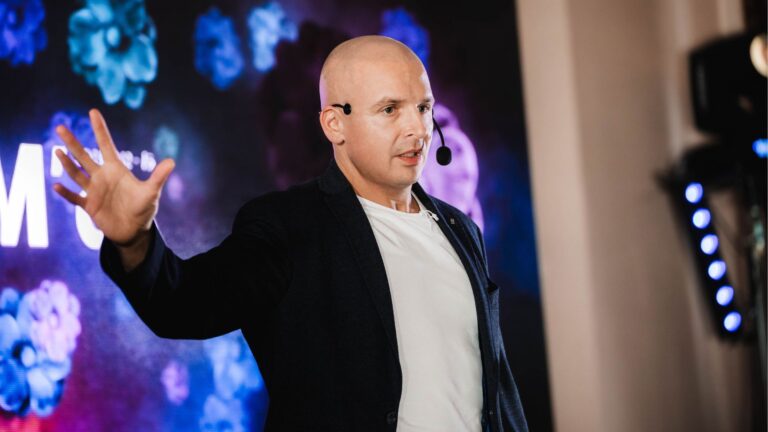
- Useful: event filming for keynote speakers — stage light is unforgiving.
- Unnecessary: documentary footage where authenticity matters, production and outdoor work.
Why this matters commercially
In practice make-up takes twenty to thirty minutes per person. It is the simplest step in the whole production where the result visibly improves — which is exactly why professional productions never skip it.
Frequently asked questions
Do men need make-up on a shoot?
Yes, and more often than women. For men it usually means matte powder on the forehead and nose — five minutes of work that shows immediately in the frame.
Can we manage without a make-up artist?
For a short recording, matte powder and tissues are enough. When filming lasts more than an hour or several people appear, it is worth booking someone — otherwise faces start to shine halfway through and the edit cannot fix it.